
Throne of Jerdonia
Type:
Game Design Concept in progress
Focus
Systems & Multiplayer Dynamics
Background & Scope
Throne of Jerdonia is a long-term passion project of mine.
It started as an idea I couldn’t let go of, a concept that explores a gap I see in traditional RTS design:
power through legitimacy and player-driven politics.
Due to its scope, my current focus is on developing the systems and design foundation.
My goal is to bring this project to life one day.
The Concept
Throne of Jerdonia is an asymmetrical RTS designed for four players,
focused on legitimacy instead of pure destruction.
Three players take the role of lords expanding in a dangerous valley,
while one player rules as a king from a fortified throne city.
The core idea is simple:
You don’t win by eliminating others
you win by being accepted as the rightful ruler.
Core Systems
Stability System
Stability is a dynamic meta value representing a player's legitimacy as a ruler.
It is shaped by political decisions, military strength, sustainability, alliances, and humanitarian behavior.
As the game progresses, a Lord's rising stability approaches that of the King.
Once this threshold is reached, a game mechanic triggers the King's death and shifts the game into a critical phase.
Other players must decide now whether to support the Crown Prince or pursue their own claim to power.
Alliances, past decisions, and player relationships determine the outcome.
Tribute & Power Balance
The game is built around a core dependency between players. While the Lords begin in a fertile but dangerous valley, surviving against bandits and building their settlements, the King faces a different problem.
He starts in a throne city on a barren plateau, which is already well fortified but still in need of expansion and maintenance.
His land is resource-poor, his people are starving, and his stability is constantly declining.
This creates a natural tension.
The Lords need protection, support, and resources to survive and grow.
The King needs tribute and cooperation to stabilize his rule and he must balance pressure and fairness to maintain control.
This mutual dependency drives the early and mid game, before alliances break, power shifts, and players begin to challenge the throne.
Throne Claim Mechanic
To win the game, a player must be accepted as the new ruler by all other players.
A player can declare a claim to the throne once they believe their stability is strong enough to rule over others.
Other players must then choose to either support or reject the claim.
Support leads to alliance
Rejection leads to war
This means victory is achieved through recognition or by force.
Design Goal
The goal of this project is to explore how strategy games
can move beyond traditional win conditions like destruction.
Instead, Throne of Jerdonia focuses on:
player interaction
social dynamics
meaningful decision-making
The system creates tension similar to poker:
players must read each other's behavior and decisions,
take risks, and decide when to trust, betray, or act.
This leads to emergent gameplay where every match tells a different story.
Player Experience
Throne of Jerdonia is designed as an intense strategic experience, while remaining approachable through clear and logical gameplay systems.
Players are constantly balancing risk and trust.
Every decision has consequences:
Support creates alliances.
Rejection creates enemies.
No player can win alone without being acknowledged
or without forcing others to submit.
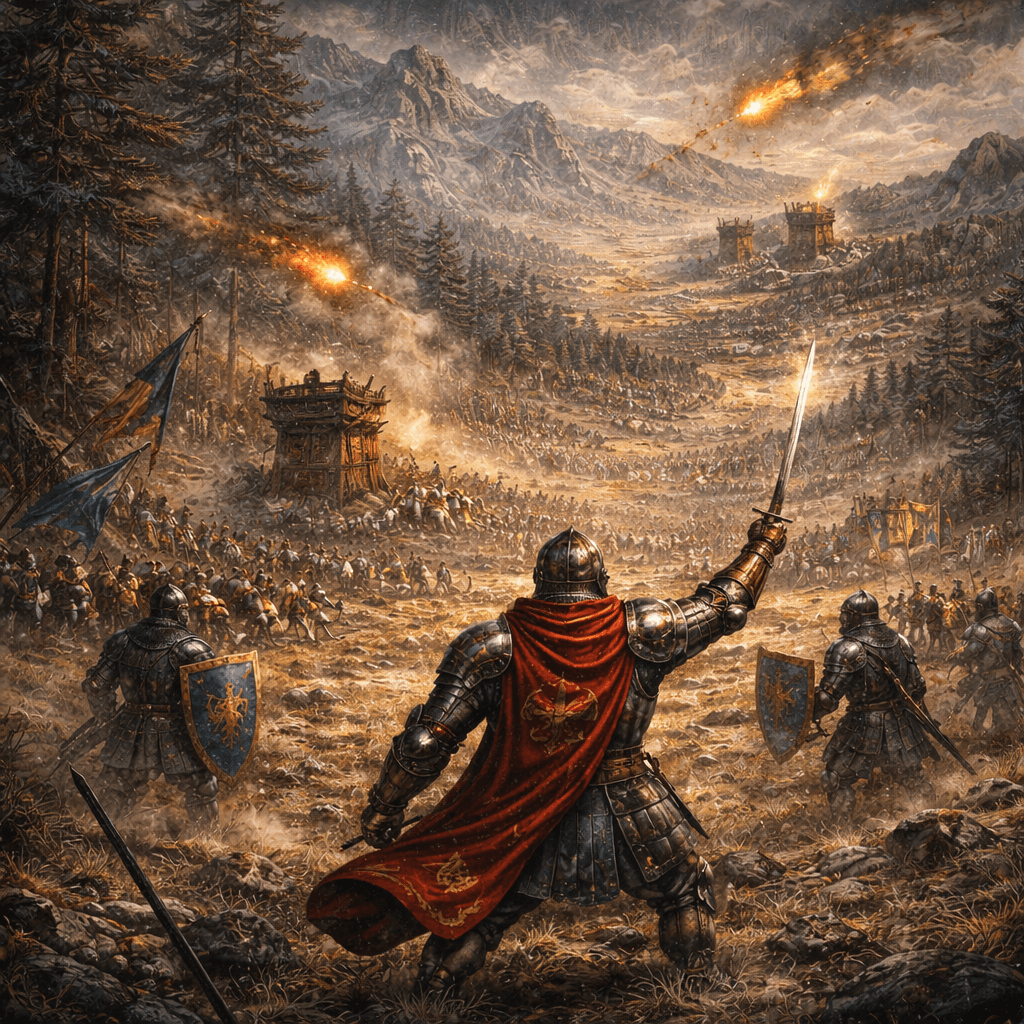
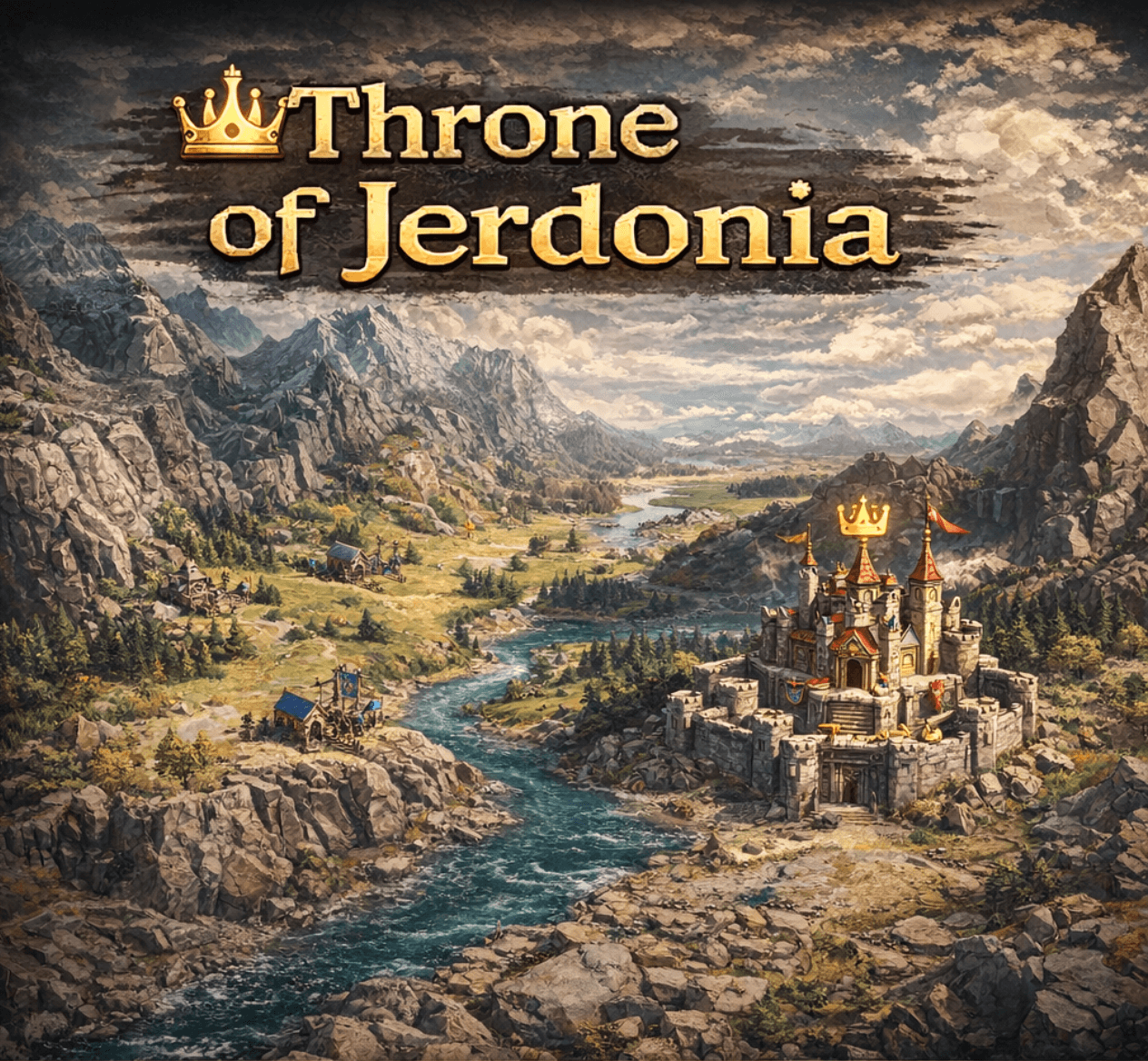
*Mood images for this project are generated for visual exploration